7 Accelevents Competitors Compared by Workflow and Team Fit (2026)
-1690817315934-652794559.png&w=96&q=75)
Benjamin Dell
Founder, HeySummit
Choosing an Accelevents competitor is less about finding a longer feature list and more about matching the platform to your event's most expensive failure mode. A team worried about badge-printing queues needs a different operating model from a lean team coordinating speakers, paid access, sponsors, affiliates, replays, and follow-up.
HeySummit publishes this guide and appears in the comparison. To make that useful rather than promotional, every option is assessed by the same questions: what it is best suited to, what the official product material supports, what still needs verifying, and where its operating model differs from Accelevents.
The short version: Accelevents may still be the right choice when onsite, mobile, exhibitor, and multi-format event operations need to live together. Consider an alternative when another workflow—not a generic feature count—is more important.
Accelevents alternatives: the short answer
| Platform | Strongest workflow | Best-fit team or event | Core strength | Verify before buying | Buying motion |
|---|---|---|---|---|---|
| HeySummit | Speaker-led and content-led event programmes | Lean creator, educator, community, nonprofit, and marketing teams | Connected tickets, speakers, sponsors, affiliates, video integrations, replays, and reporting | Onsite check-in requirements and any need for native badging, floor plans, or a branded mobile app | Published plans, free trial, and enterprise conversation |
| Whova | Mobile-first conference engagement | Associations, conferences, and events where networking and agendas lead | Attendee app, networking, check-in, badges, surveys, and speaker coordination | Current quote, package boundaries, integrations, and virtual-event scope | Request a quote |
| Cvent | Enterprise governance and broad event portfolios | Large organisations running multiple event types across teams or regions | Registration, engagement, onsite operations, lead capture, CRM sync, and reporting breadth | Modules, services, users, implementation, and contracted support | Sales-led, modular quote |
| Swoogo | Branded registration and repeatable event sites | Event teams that value flexible registration logic and integrations | Unlimited events and registrations, site building, workflows, reporting, and integrations | Onsite and mobile add-ons, users, domains, and support tier | Published annual starting price plus enterprise and add-ons |
| vFairs | Immersive virtual, hybrid, and trade-show experiences | Teams combining virtual venues, exhibitors, onsite tools, and hands-on support | Virtual environments, mobile app, badging, check-in, lead capture, and project support | Quote scope, services, integrations, and the exact experience included | Demo and quote |
| Bizzabo | B2B event programmes and event marketing | Mid-market and enterprise teams running a portfolio of events | Registration, event sites, engagement, mobile, onsite, streaming, and analytics | Users, premium add-ons, hardware, services, and portfolio fit | Published platform starting price with add-ons |
| Eventbrite | Public ticket discovery and straightforward ticketed events | Organisers selling public tickets without a deep multi-speaker content system | Fast publishing, ticketing, payments, promotion, marketplace discovery, and door scanning | Paid-ticket fees, optional marketing spend, and complex partner or content needs | Free publishing; ticketing fees on paid tickets |
Do not read the table as a universal ranking. Use it to decide which two or three products deserve a real demo with your own event data and exception cases. HeySummit's event platform comparison hub can help when your shortlist narrows to a more specific product-versus-product decision.
What Accelevents is built to handle
Accelevents positions its platform across in-person, virtual, and hybrid events. Its current product navigation covers registration, event marketing, exhibitors and sponsors, event websites, check-in, badge printing, a mobile app, lead capture, agendas, speakers, virtual delivery, networking, meetings, reporting, and integrations.
The buying model is equally important. Checked on 21 July 2026, Accelevents' pricing page listed Professional from $7,500 for one event and Business from $13,500 for unlimited events. Enterprise and White Label were quote-based. The same page described virtual-event functionality as a paid add-on, so confirm the complete package rather than comparing headline prices alone.
Accelevents also offers dedicated onsite kits for check-in and badge-printing workflows. That is a meaningful distinction if your risk sits at venue entrances, printer stations, exhibitor lead capture, or event-day support.
Accelevents may still be right when you need a broad onsite, mobile, exhibitor, sponsor, registration, and virtual-event system from one vendor. An alternative is worth exploring when your team shape, content model, public-discovery needs, enterprise governance, or total-cost profile points somewhere else.
Why teams compare Accelevents competitors
Most teams do not switch because a product has “too few features.” They switch because the operating model no longer fits. The admin work may be too heavy for a small team. A recurring programme may need a different event-volume model. A conference may require deeper mobile networking. A creator-led summit may care more about speaker, affiliate, ticket, and replay workflows than onsite hardware.
Make those differences explicit before you book demos:
- Event format and repeatability: one flagship conference, recurring webinars, workshops, online summits, field events, trade shows, or a mixed portfolio.
- Team shape: a lean owner-operator, an event marketing team, a central events function, or distributed regional organisers.
- Onsite risk: arrival surges, walk-ins, badge printing, connectivity, multiple entrances, hardware, lead retrieval, and event-day support.
- Content and partner operations: speakers, sponsors, exhibitors, affiliates, offers, video providers, replays, and attendee access.
- Attendee experience: public discovery, branded registration, mobile agendas, networking, virtual delivery, and on-demand access.
- Data and governance: permissions, consent, CRM sync, APIs, exports, security review, accessibility evidence, reporting, and deletion.
- Total cost: licences, events, attendees, ticket fees, add-ons, implementation, hardware, services, support, migration, and staff time.
Accessibility belongs in the evaluation rather than in a compliance logo row. Use the W3C's WCAG guidance as a concrete baseline, then test registration, authentication, keyboard navigation, mobile flows, video, captions, and attendee content. Do not infer conformance from a marketing badge.
Seven Accelevents alternatives, compared by fit
1. HeySummit: for lean speaker-led and content-led event programmes
HeySummit is designed for teams that use events to grow an audience, build authority, and generate revenue without turning the organiser into a systems integrator. The workflow connects event pages, registration, tickets and access rules, speaker management, sponsors, affiliates, video and streaming integrations, custom emails, analytics, and replay or on-demand access.
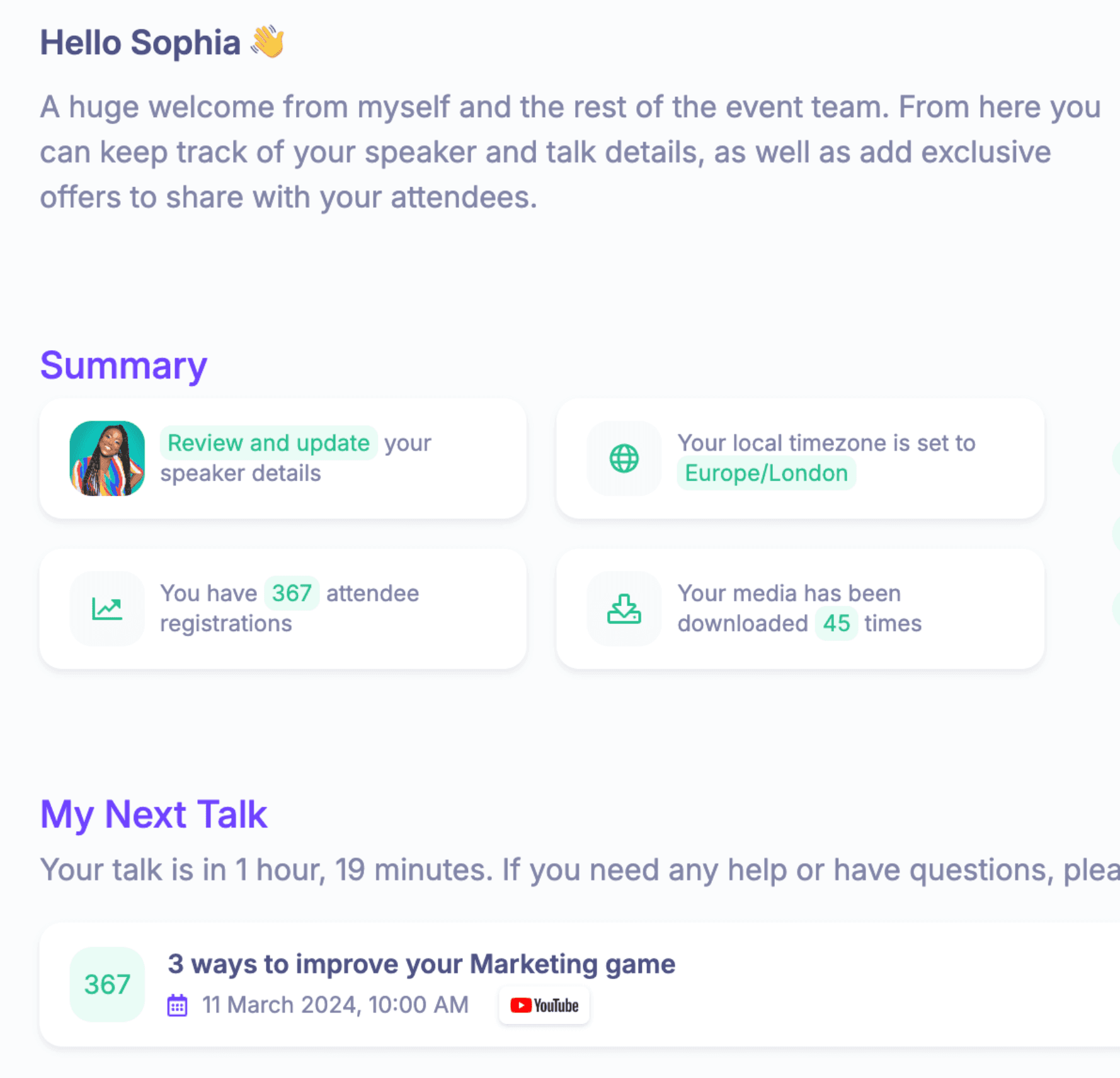
That makes HeySummit a fit for creators, educators, communities, nonprofits, expert-led brands, and lean marketing teams running online summits, webinars, workshops, hybrid programmes, or content libraries. You can inspect the broader workflow in the HeySummit product tour, or look at the specific speaker dashboard, sponsor booth, affiliate platform, and ticketing and access surfaces.
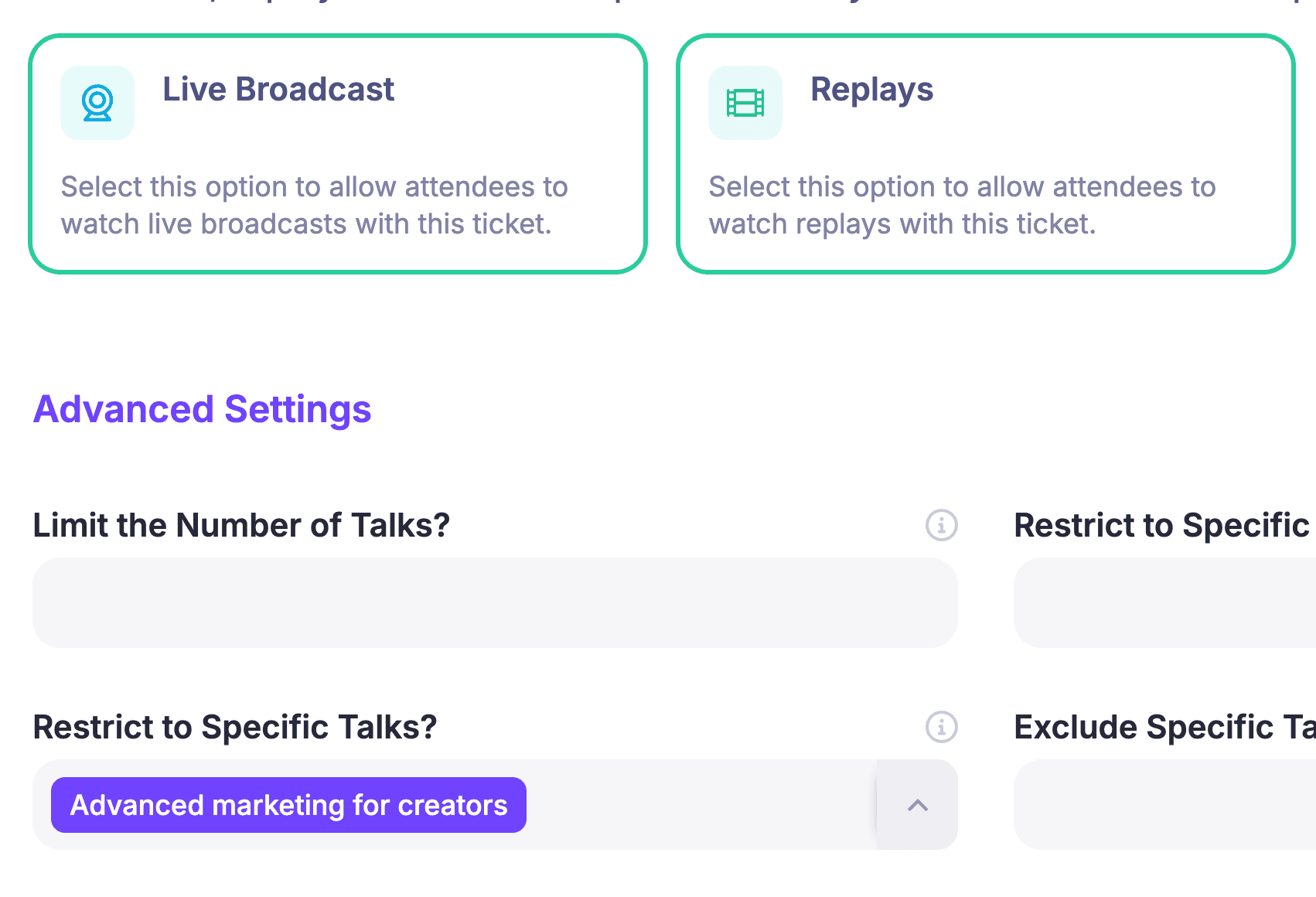
The boundary matters. HeySummit should not be treated as a native badge-printing hardware suite, venue-sourcing system, floor-plan tool, exhibitor lead-retrieval product, or white-label mobile-app platform. Verify any onsite check-in requirement against the current product before committing. When speaker, ticket, sponsor, affiliate, replay, and content workflows matter more than specialist onsite infrastructure, HeySummit's online event platform is a relevant test.
Buying follows published plans, a free trial, and an enterprise conversation for larger needs. Review live HeySummit pricing for the current plan allowances and transaction model rather than relying on a copied figure.
2. Whova: for mobile-first conferences and attendee networking
Whova is worth evaluating when the attendee app is part of the event's core value. Whova's event management product page covers QR and self check-in, badge creation, polls, surveys, speaker coordination, sponsor and exhibitor reporting, and post-event analytics. Its broader platform also emphasises agendas, announcements, attendee networking, and mobile participation.
Best for: conferences, associations, academic events, and programmes where participants need to navigate sessions and meet one another. What to verify: the current quote, registration rules, badge workflow, app packaging, integrations, virtual or hybrid coverage, and who owns the final campaign and attendee data.
Whova differs from Accelevents by leading more visibly with its attendee app and networking experience. Do not assume that strength automatically answers content access, replay monetisation, affiliate tracking, or your CRM record. Show those workflows during the demo.
3. Cvent: for enterprise governance and complex event portfolios
Cvent describes its platform as a broad event and hospitality system for planning, registration, engagement, attendance data, lead capture, CRM sync, and performance reporting. It is a natural shortlist candidate when several departments, regions, event types, or governance requirements need one enterprise platform.
Best for: large organisations managing complex or high-volume programmes. What to verify: which registration, mobile, check-in, badging, lead capture, venue, hospitality, reporting, integration, and support modules are actually included in the proposal.
Cvent differs from Accelevents by extending further into enterprise programme and hospitality operations. That breadth can be valuable, but it also means implementation, modules, services, and procurement are part of product fit. Bring a real approval path, permission model, report, and integration to the demo.
4. Swoogo: for branded registration and repeatable event sites
Swoogo is a strong candidate when registration flexibility, branded event sites, integrations, automated workflows, and reusable event programmes lead the decision. Checked on 21 July 2026, Swoogo's pricing page listed Professional from $11,800 per year for one full user and one reporting user, with unlimited events and registrations, a check-in app, integrations, a custom domain, and automated workflows. Enterprise and premium upgrades add further controls and services.
Best for: teams running many branded events with conditional registration and connected marketing systems. What to verify: user roles, domains, onsite and mobile add-ons, call-for-speakers needs, APIs, support, and the exact annual package.
Swoogo differs from Accelevents by centring its published offer on event and registration volume with per-user pricing. For a deeper workflow comparison, see the published Swoogo alternatives guide.
5. vFairs: for immersive virtual, hybrid, and trade-show experiences
vFairs' event management platform combines branded event sites, registration and ticketing, check-in and badging, a mobile app, sponsor and exhibitor management, speaker tools, virtual venues, webinars, and reporting. The company also emphasises dedicated project and live-event support.
Best for: teams that want immersive virtual delivery, exhibitor or trade-show workflows, and onsite tools with service support. What to verify: which virtual environment, mobile, onsite, lead-capture, integration, and support elements appear in the quote, plus what your team must configure itself.
vFairs and Accelevents can overlap across onsite, exhibitor, mobile, and virtual events. The practical difference will often sit in experience design, services, implementation ownership, and contracted scope rather than a single headline feature.
6. Bizzabo: for B2B event programmes and event marketing teams
Bizzabo's Event Experience OS covers registration and marketing, event websites, event management, engagement, mobile, onsite check-in and badges, streaming, and analytics across in-person, virtual, hybrid events, and webinars. The product is positioned for event organisers and B2B marketing teams at mid-market and enterprise companies.
Best for: organisations treating events as a measurable marketing programme rather than a series of disconnected projects. What to verify: users, premium add-ons, onsite hardware and services, mobile and streaming scope, integrations, support, and how the platform fits the whole event portfolio.
Bizzabo publishes a starting price for its core event software and lists onsite technology and services separately. That transparency helps create a budget range, but the contracted package remains the source of truth.
7. Eventbrite: for public ticket discovery and straightforward paid events
Eventbrite uses a different operating model from a broad event-content platform. Its strengths are fast public event publishing, ticket sales, secure payments, promotion, marketplace discovery, and door operations. That can be exactly right for a workshop, class, performance, community event, or public experience whose audience may already browse Eventbrite.
Best for: public ticketed events that do not need a deep speaker, sponsor, affiliate, replay, or multi-track content system. What to verify: ticketing fees in your market, who absorbs them, optional advertising costs, payout timing, attendee communications, check-in, exports, and integrations.
Eventbrite's organiser pricing page says events can be published for free, free tickets have no ticketing fees, and attendees pay ticketing fees on paid tickets unless the organiser chooses to cover them. Eventbrite differs from Accelevents by prioritising ticketing and discovery over a broad onsite, exhibitor, mobile, and content operating system.
Choose by the failure mode your team cannot absorb
- Native onsite hardware, badging, exhibitors, and mobile: keep Accelevents in the lead, then compare it with vFairs, Whova, Cvent, and Bizzabo against real venue scenarios.
- Enterprise governance, portfolio reporting, and complex organisational requirements: compare Cvent and Bizzabo with Accelevents using the exact contracted modules.
- Mobile networking and conference engagement: put Whova on the shortlist.
- Branded registration and repeatable sites: test Swoogo's registration and integration model.
- Public discovery and simple ticket selling: test Eventbrite with your local fee structure.
- Lean speaker-led, partner-led, and replay-led events: test HeySummit across the complete content and revenue workflow.
If two branches fit, do not decide from a sales deck. Give each vendor the same representative event and score what happens from first setup through final CRM and reporting output.
A copyable demo and migration checklist
Bring one real event into every demo. Include a difficult ticket or registration rule, a speaker, a sponsor or exhibitor, an integration, a report, and an exception that has caused support work before.
- Show the attendee journey: event page, registration, payment, confirmation, authentication, agenda, content access, mobile view, and replay.
- Show the organiser workload: templates, cloning, permissions, bulk edits, exception handling, notifications, and reporting.
- Prove partner workflows: speaker updates, sponsor visibility, exhibitor leads, affiliate attribution, assets, and results.
- Break the onsite flow safely: test duplicate scans, walk-ins, printer or device failure, weak connectivity, multiple entrances, and support escalation.
- Inspect the data path: consent, source and UTM values, tickets and orders, attendance, CRM sync, retries, exports, deletion, and audit needs.
- Test accessibility: keyboard-only registration, error messages, labels, contrast, authentication, mobile behaviour, video, and captions.
- Price the full system: users, events, attendees, transaction fees, modules, services, hardware, onboarding, support, migration, and staff time.
For migration, inventory event sites, domains, templates, registrants and consent, tickets and orders, speakers, sponsors, exhibitors, affiliates, media, emails, integrations, webhooks, reports, permissions, and historical data. Pilot one bounded event, name the rollback owner, and agree acceptance criteria before the old system is retired.
Ask the vendor to mark each requirement as native, integrated, add-on, service-assisted, planned, or unavailable. Put those answers in the proposal. A confident “yes” during a demo is not the same as a tested workflow.
The right alternative is the one that fits your operating model
Accelevents is a credible fit for teams that need broad onsite, mobile, exhibitor, sponsor, registration, and virtual-event capabilities together. It should remain on the shortlist when those are the expensive failure modes.
The case for switching gets stronger when another model clearly fits better: Whova for mobile-led conferences, Cvent for enterprise governance, Swoogo for repeatable branded registration, vFairs for immersive and service-supported experiences, Bizzabo for B2B event programmes, Eventbrite for public ticket discovery, or HeySummit for lean speaker-led and content-led events.
If that final model sounds like your programme, see how HeySummit works. Then compare current plans with the complete implementation and migration cost of every product on your shortlist.
Frequently asked questions
Table of Contents
Accelevents alternatives: the short answerWhat Accelevents is built to handleWhy teams compare Accelevents competitorsSeven Accelevents alternatives, compared by fitChoose by the failure mode your team cannot absorbA copyable demo and migration checklistThe right alternative is the one that fits your operating modelFrequently Asked QuestionsTry HeySummit free
HeySummit is the easiest way for creators and educators to grow their audience, authority and revenue with professional online events created in minutes, not weeks.
Share this article on:
Recent Posts
Loading feed...