Event Email Sequence: Invitation, Reminder, Replay & Follow-Up Templates

Nina Lelidou
Content Contributor, HeySummit
An event email sequence is the set of messages that moves someone from "this looks interesting" to registered, prepared, present, followed up, and ready for the next step. The invitation matters, but it is only one part of the journey.
For online events, webinars, workshops, summits, and paid events, a strong sequence usually includes an announcement or invitation, registration confirmation, speaker or session highlights, reminders, access instructions, no-show follow-up, replay access, and a post-event offer or next action. If the event has sponsors, partners, affiliates, or paid ticket tiers, the sequence needs a few extra messages too.
This guide gives you practical event email templates you can adapt for a single webinar, multi-speaker summit, paid workshop, replay window, or on-demand event. Use the examples as starting points, then adjust the tone, timing, and CTA to match your audience.
Event invitation email vs. full event email sequence
An event invitation email asks someone to register or save a seat. A full event email sequence supports the whole attendee journey: why the event matters, how to register, what happens after registration, when to attend, how to access the event, what to do if they miss it, and how to act after the event.
Current event email guidance tends to treat the invitation as one stage in a larger campaign rather than the whole job. Mailchimp's event email marketing guide recommends reminder messages at key intervals before the event, while Stripo's webinar follow-up guidance recommends a post-event message with the recording, slides, or other useful resources within 24 hours. Together, that points to a full journey: invite, confirm, remind, help people attend, send the replay, and follow up with the next useful action.
That sequence view is useful because people rarely decide, remember, attend, and buy from one email. Each message should answer one question at the right moment.
| Reader question it answers | Main CTA | What to include | |
|---|---|---|---|
| Announcement or invitation | Is this event worth my time? | Register, save a seat, or buy a ticket | Outcome, audience fit, date, speaker or host, key promise, clear CTA |
| Registration confirmation | Am I in, and what happens next? | Add to calendar or review event details | Date, time zone, access expectations, calendar link, support contact |
| Speaker or session highlight | What will I learn, and why should I show up live? | View agenda or share with a colleague | Session value, speaker credibility, relevant outcomes, share link |
| Reminder | When is it, where do I go, and what should I prepare? | Join, add to calendar, or check access | Join link, agenda, prep notes, support instructions, replay expectations |
| No-show follow-up | I missed it. Can I still get value? | Watch replay or take the next step | Replay link, best section to watch first, deadline, related offer |
| Post-event follow-up | What should I do now? | Book, buy, reply, download, join, or share feedback | Recap, resource links, offer, survey, next event, product CTA |
If your registration page is still weak, fix that before sending more email. A stronger event landing page checklist gives your invitation somewhere persuasive to send people, with a clear promise, agenda, speakers, ticket details, FAQs, and next step.
Copyable event email sequence by event type
Use these timelines as a starting point. Shorten them for a small audience with a simple event. Expand them when the event has multiple speakers, paid tickets, sponsors, partners, or replays.
| Event type | Recommended sequence | Best CTA pattern | Extra note |
|---|---|---|---|
| Webinar or workshop | Invitation, confirmation, 1-week reminder, 24-hour reminder, 15-minute or live-now reminder, replay/follow-up, no-show follow-up. | Register, add to calendar, join live, watch replay, book or download. | Keep the reminder emails short. The goal is attendance, not a second sales page. |
| Multi-speaker summit | Announcement, speaker reveal, invitation, confirmation, track/session highlights, daily reminders, replay-window email, sponsor/partner follow-up, post-event offer. | Explore agenda, claim ticket, choose sessions, upgrade access, watch replay. | Segment by session interest or ticket type when you have the data. |
| Paid event | Early-bird invitation, price-change reminder, ticket confirmation, access instructions, final reminder, replay or premium-access email, post-event offer. | Buy ticket, upgrade ticket, check access, watch replay, claim bonus. | Make ticket access, refund terms, replay rules, and support contact easy to find. |
| Replay or on-demand window | Replay announcement, "start here" email, deadline reminder, topic-specific follow-up, final replay-window email, next event or offer. | Watch replay, save playlist, upgrade access, book a call, join next event. | Replay access is not just a recording link. Tell people where to start and why now. |
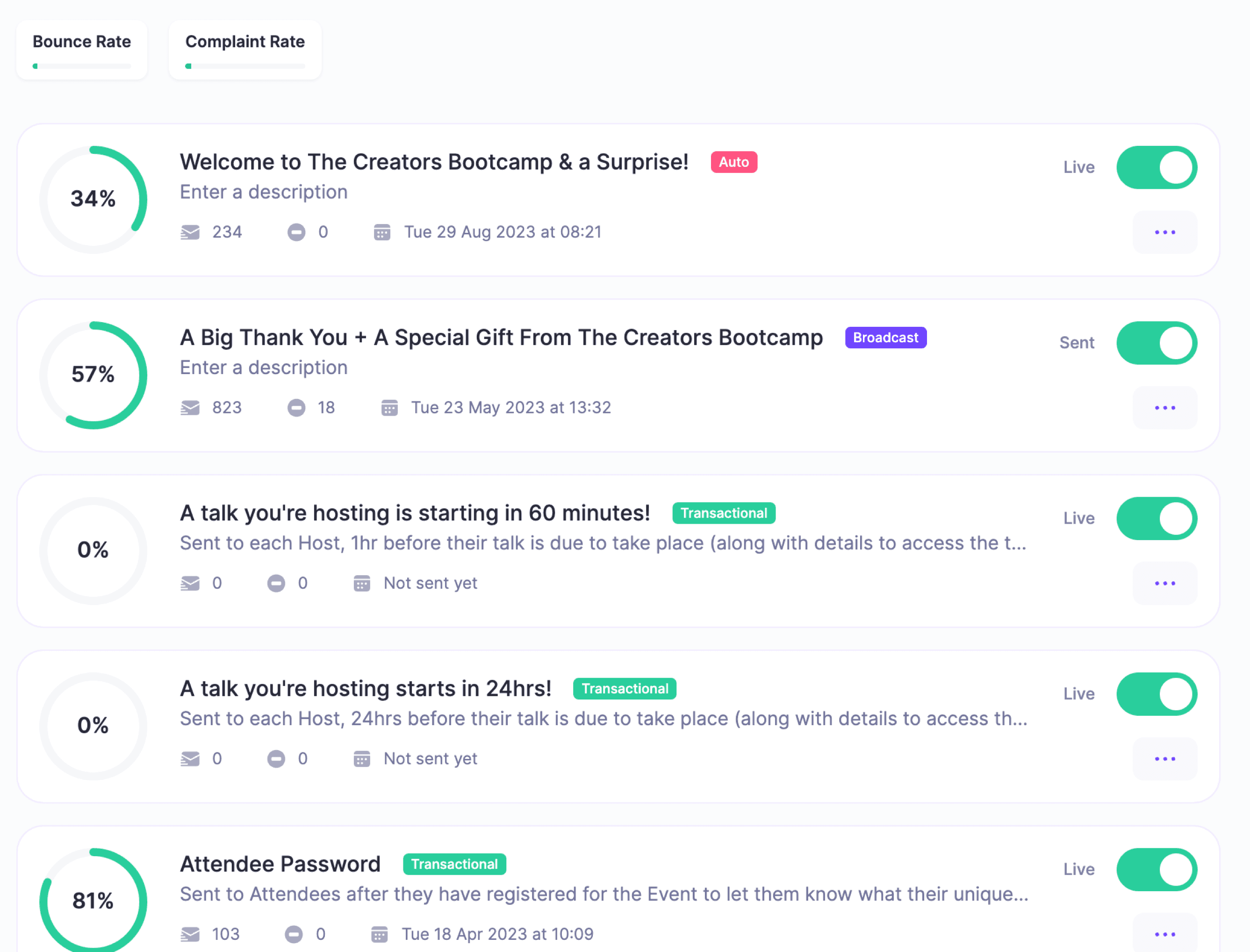
HeySummit's custom event emails are built for event communications like reminders, attendee emails, custom content, mail merge, sender management, and email reporting. For broader nurture or sales workflows, use your CRM or email platform alongside HeySummit's CRM and revenue integrations.
1. Announcement or invitation email template
The invitation should sell the outcome, not just the date. Make the reader feel, "This is for me, and I know what I will get if I attend."
Template
Subject: Join us for [event name]: [specific outcome]
Hi [first name],
On [date], we are hosting [event name], a [format] for [audience] who want to [desired outcome].
We will cover:
- [Session or lesson 1]
- [Session or lesson 2]
- [Session or lesson 3]
You should join if you are trying to [specific problem or job]. By the end, you will have [practical takeaway].
Save your seat: [registration link]
See you there,
[host name]
Example
Subject: Build your first paid workshop funnel in 60 minutes
Hi Maya,
On July 22, we are hosting a live workshop for creators and educators who want to turn a small audience into a paid online event.
We will cover how to choose the event promise, structure a simple paid offer, build the registration page, and send the first invitation sequence.
You should join if you have an email list, community, or course audience and want a practical way to test demand without building a full course first.
Save your seat here: [registration link]
If your event is more than a single webinar, explain the format early. This is where a related comparison such as webinar tool vs event platform can help readers understand when a broader event workflow is useful.
2. Registration confirmation email template
The confirmation email is not a place to resell the whole event. It should reduce uncertainty and make attendance easy.
Template
Subject: You are registered for [event name]
Hi [first name],
You are registered for [event name]. Here are the details:
- Date: [date]
- Time: [time and time zone]
- Where to join: [join or event access link]
- What to prepare: [one short prep note]
Add the event to your calendar here: [calendar link]
If you have questions before the event, reply to this email or contact [support email].
For paid events, add ticket/access language. If the event has free, VIP, and replay ticket tiers, point attendees back to their ticket details rather than listing every rule in the email. For monetized summits, pair this with your online summit ticket pricing strategy so access rules, upgrade moments, and replay windows are clear before launch.
3. Speaker or session highlight email template
A session highlight email gives registrants a reason to show up live. It also gives non-registrants a second reason to register without repeating the original invitation.
Template
Subject: [Speaker name] is joining us to unpack [topic]
Hi [first name],
One session we are especially excited about is [session title] with [speaker name].
This session is for people who want to [specific outcome]. [Speaker name] will cover:
- [Specific point 1]
- [Specific point 2]
- [Specific point 3]
If you are already registered, check the agenda here: [agenda link]
If you have not registered yet, you can save your seat here: [registration link]
For a summit, create one email per track or audience segment instead of sending every speaker bio to everyone. The best highlight email makes the reader feel personally invited to the sessions that fit their goal.
4. Reminder email templates
Reminder emails should remove uncertainty: when the event starts, where to go, what to prepare, and what happens if the attendee cannot join live. AddEvent's reminder email guidance recommends keeping reminders brief and focused on time, date, and details, while Beefree's event reminder email guide recommends putting key event information high in the email so attendees can find it quickly. Omnisend's event reminder examples make the same broader point: clarity and useful details matter more than an overdesigned reminder.
One-week reminder
Subject: One week until [event name]
Hi [first name],
[Event name] starts in one week. Here is what to expect:
- [Session, workshop, or agenda highlight]
- [Speaker or host detail]
- [Practical takeaway]
Keep your calendar link handy: [calendar link]
Event access: [event access link]
24-hour reminder
Subject: Tomorrow: [event name]
Hi [first name],
We start tomorrow at [time and time zone].
Your access link is here: [join link]
Before you arrive, please [short prep task]. If you cannot join live, [replay note].
15-minute or live-now reminder
Subject: We are starting now: [event name]
Hi [first name],
We are about to start. Join here: [join link]
If the link does not work, contact [support email] and we will help.
Keep final reminders short. If a reminder needs three screens of explanation, the event access path is probably too complicated.
5. Paid-ticket access details email template
Paid events need a clearer access email because attendees may have different ticket tiers, bonuses, replay windows, or purchase receipts. Do not assume everyone remembers what they bought.
Template
Subject: Your [ticket name] access for [event name]
Hi [first name],
You purchased [ticket name] for [event name]. Your ticket includes:
- [Live session or event access]
- [Replay or on-demand access rule]
- [Bonus, add-on, or resource if relevant]
Access your event here: [event access link]
Need to upgrade or check your ticket? Go here: [ticket/account link]
In HeySummit, event ticketing can support free and paid ticket types, access rules, ticket expiry, add-ons, donations, and payment-provider choices. Use those rules to make the access email specific, but do not bury people in every backend setting.
6. No-show follow-up email template
A no-show email should be generous and specific. The attendee already missed the live moment, so tell them exactly how to catch up and what to watch first.
Template
Subject: Missed [event name]? Start with this part
Hi [first name],
Sorry we missed you live. The replay is available here: [replay link]
If you only have 15 minutes, start at [timestamp or section], where we cover [specific takeaway].
The replay is available until [deadline]. After you watch, the best next step is [download, reply, book, buy, or join link].
If your event includes a replay library or evergreen access, point people to a clean on-demand content experience instead of dropping them into a folder of recordings. Replays work better when attendees know which session to watch first and what action to take next.
7. Replay-window email template
Replay access is not just a recording link. It is a second campaign window. Use it to help attendees finish the event, upgrade their access, share the event internally, or move toward the offer.
Template
Subject: Your replay window is open for [event name]
Hi [first name],
The replay window for [event name] is now open.
Start here if you want to [goal 1]: [session or replay link]
Start here if you want to [goal 2]: [session or replay link]
Replays are available until [deadline]. If you want extended access, you can [upgrade, claim pass, or learn more].
This is a good place to segment by attendance. Someone who watched three sessions needs a different replay email than someone who registered and never arrived.
8. Post-event offer or follow-up email template
The post-event follow-up should connect the event to a clear next step. That could be a sales call, product trial, download, community invitation, course, ticket upgrade, sponsor offer, partner resource, or survey.
Template
Subject: Your next step after [event name]
Hi [first name],
Thanks for joining [event name]. Here are the most useful resources from the event:
- [Replay or session link]
- [Download or checklist]
- [Related resource]
If you want help with [problem], the next step is [CTA].
You can [book a call, start a trial, buy, reply, or register for the next event] here: [CTA link]
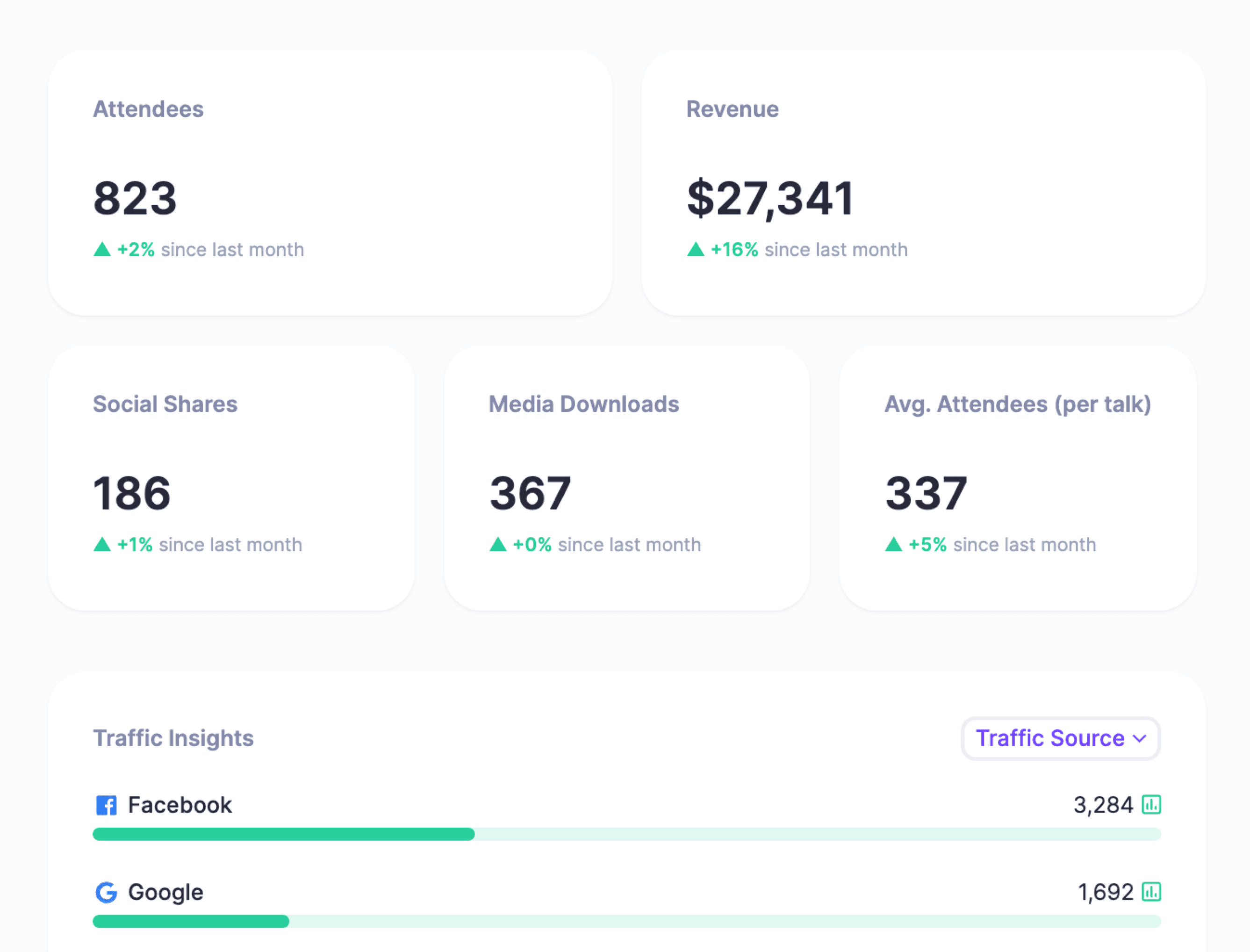
After the event, check what actually happened before you write the next campaign. Use event analytics to review registrations, attendance, revenue, replay engagement, and source performance, then feed those lessons into your next invitation and follow-up sequence.
9. Sponsor or partner follow-up email template
If your event involves sponsors, affiliates, or partners, do not treat follow-up as one generic thank-you. Send a useful recap, highlight the assets they can share, and make any next step obvious.
Template
Subject: Thanks for supporting [event name]
Hi [partner name],
Thank you for helping make [event name] happen. Here is the quick recap:
- [Audience or registration summary, if approved to share]
- [Top session or content highlight]
- [Sponsor placement, offer, or partner asset delivered]
Here are the assets you can share with your audience: [links]
If you would like to explore the next event together, here is the best next step: [partner CTA]
Keep any performance claims honest and source-backed. If you do not have approved reporting, say what was delivered rather than inventing engagement or revenue proof.
Event email sequence checklist
Before you publish the first invitation, check the full sequence against this list:
- One job per email: every message should have a clear purpose and one primary CTA.
- Consistent event details: date, time zone, event name, speaker names, ticket rules, and support contact should match everywhere.
- Clear access path: attendees should know where to register, join, upgrade, watch replays, and get help.
- Useful segmentation: separate registered vs. unregistered, attended vs. missed, free vs. paid, and interest-based audiences when the data supports it.
- Replay plan: decide the replay window, access rules, upgrade path, and best "start here" recommendations before the event ends.
- Post-event measurement: review registrations, attendance, email performance, revenue, replay engagement, and source data before sending the next campaign.
- Product claims: verify what your platform or tool actually supports before promising automation, segmentation, replay access, or integrations.
If your event workflow crosses pages, registration, emails, tickets, access, integrations, replays, and analytics, take a look at the HeySummit product tour. The goal is not to send more email for its own sake. The goal is to make every attendee step easier to understand and easier to act on.
Frequently asked questions
Table of Contents
Event invitation email vs. full event email sequenceCopyable event email sequence by event type1. Announcement or invitation email template2. Registration confirmation email template3. Speaker or session highlight email template4. Reminder email templates5. Paid-ticket access details email template6. No-show follow-up email template7. Replay-window email template8. Post-event offer or follow-up email template9. Sponsor or partner follow-up email templateEvent email sequence checklistFrequently Asked QuestionsTry HeySummit free
HeySummit is the easiest way for creators and educators to grow their audience, authority and revenue with professional online events created in minutes, not weeks.
Share this article on:
Recent Posts
Loading feed...