Event Attendee Management: Before, During, and After Checklist

Ida
Content Contributor, HeySummit
Attendee management is the operational workflow that helps people register, understand what they can access, receive the right reminders, get support during the event, and take the next useful step after the event ends.
It overlaps with attendee engagement, but it is not the same thing. Engagement is about attention and participation. Attendee management is the whole journey around that participation: registration fields, ticket rules, access instructions, session reminders, live support, feedback, replay access, CRM handoff, and post-event follow-up.
If those pieces live in separate tools, the attendee experience can become messy fast. People miss emails, use the wrong link, ask the same access question repeatedly, or never receive the replay they were promised. A clear attendee-management workflow prevents that by deciding what each attendee needs before, during, and after the event.
Event attendee management checklist
Use this checklist as the operating map for a webinar, summit, workshop, hybrid event, in-person event, or on-demand event. Add detail where your format is more complex, especially if you have paid tickets, multiple sessions, sponsors, speakers, or replay windows.
| Stage | Attendee job | Organizer setup | Common mistake to avoid |
|---|---|---|---|
| Before the event | Register, choose the right ticket, understand the agenda, and know what happens next. | Registration page, useful fields, segments, ticket/access rules, confirmation email, reminders, calendar links, and support instructions. | Opening registration before access rules, reminder emails, ticket tiers, and support ownership are clear. |
| During the event | Find the right session, join smoothly, ask for help, participate, and know where replays will appear. | Session access, live reminders, moderation, support channel, escalation plan, engagement prompts, and attendance tracking. | Assuming attendees will know where to go without repeated, plain-language instructions. |
| After the event | Get the replay or resources, share feedback, continue the relationship, and take the next action. | Replay access, thank-you email, survey, segmented follow-up, CRM handoff, reporting, sponsor proof, and next-event or offer path. | Letting the attendee journey stop when the final session ends. |
For online and hybrid events, this workflow is especially important because the event page, emails, video access, replays, and follow-up often replace the physical signage and staff guidance people would get at a venue. A connected event platform workflow helps keep those moving parts in one place.
1. Before the event: make registration useful
Good attendee management starts before someone registers. The registration path should collect enough context to help you serve attendees without making the form feel heavy.
Set up your event landing page builder or registration page builder so the page answers the questions people have before they commit: who the event is for, what they will learn, when it happens, how access works, what is included with each ticket, and what happens after registration.
Run an event landing page checklist before promotion so the registration promise, ticket rules, access details, and support route agree across the page and the follow-up emails.
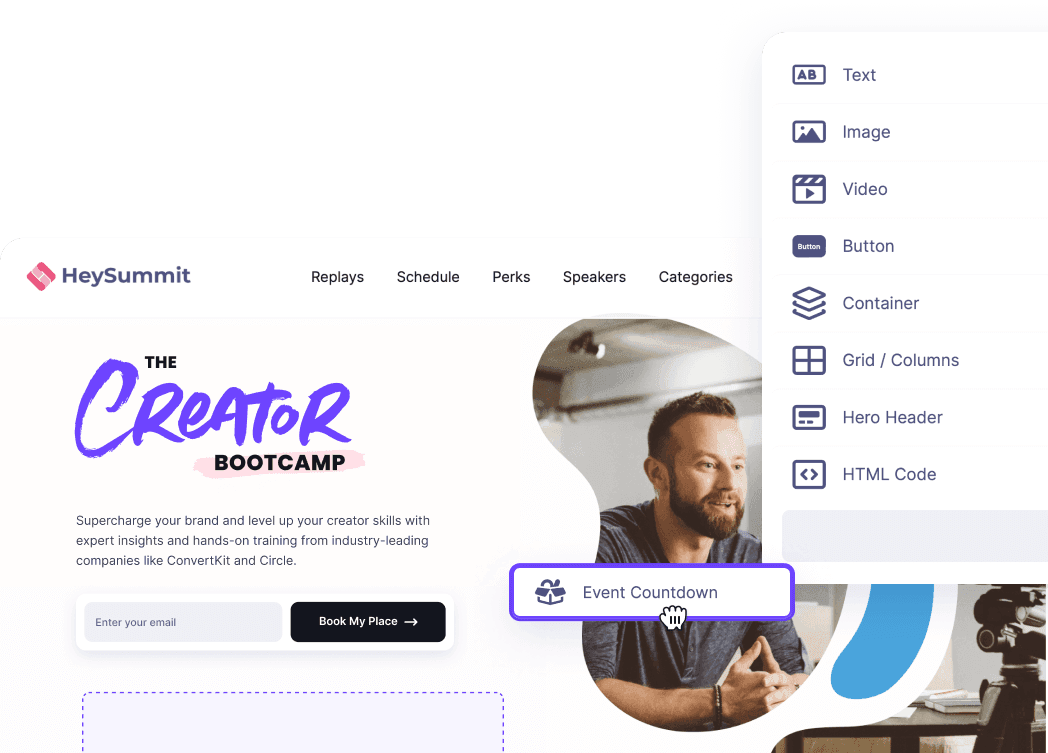
Set up registration so you can act on attendee context
Basic fields such as name and email are usually enough for a simple event. Add fields such as company, role, topic interest, ticket goal, or session preference only when they will change the attendee experience. For example, you might use topic interest to send session reminders, route questions, or plan breakout groups.
A practical rule: if you cannot name the follow-up, segment, or support decision a field will power, leave it out. Shorter forms are easier to complete, and cleaner data is easier to use.
Set ticket and access rules early
If the event has free, paid, VIP, replay, team, or sponsor tickets, define the rules before promotion starts. Decide which sessions each ticket unlocks, whether replays are included, when replay access expires, whether attendees can upgrade, and what support should do when someone has the wrong ticket.
HeySummit's event ticketing tools support ticket tiers, paid registration, access control, coupons, add-ons, donation-style checkout options, and replay access rules. That matters because ticket confusion quickly becomes attendee-support work.
A purchaser and an attendee are not always the same person. For example, a fictional buyer might purchase four places and leave two attendee identities unassigned. Reconcile the purchased quantity with named assignments, keep missing identities visible, send each person their own instructions, and test the promised access before the event. Use this event group registration handoff worksheet for the roster and exceptions; the worksheet is an operating example, not a set of HeySummit-native status names or group claim codes.
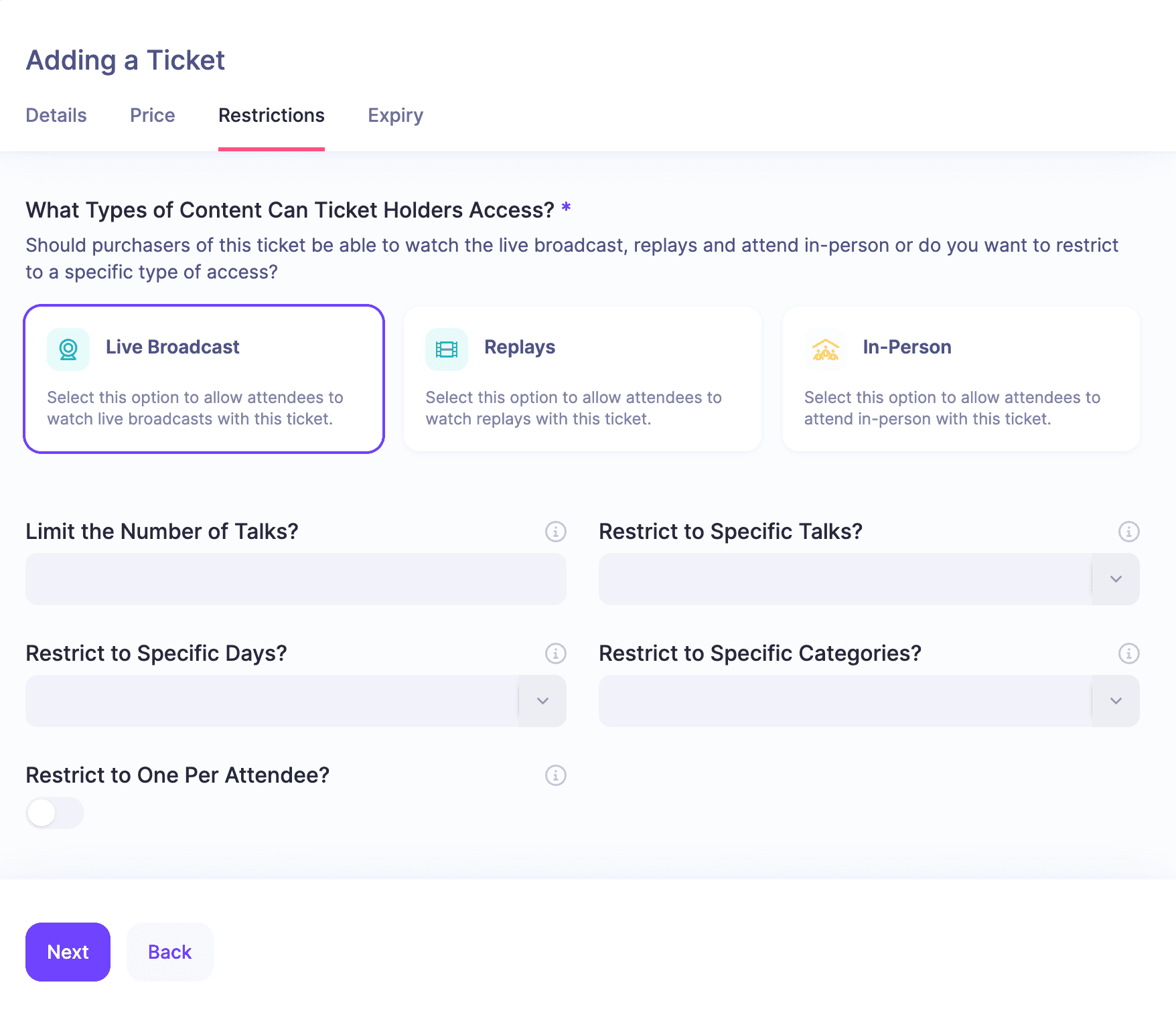
Write reminders around attendee questions
Reminder emails should answer the practical questions an attendee has at that moment: when is it, where do I join, what should I prepare, what ticket do I have, who can I contact, and will there be a replay?
Mailchimp's event email marketing guide recommends using event email campaigns to send invitations, reminders, and follow-up messages around the event journey. For HeySummit-hosted events, the HeySummit attendee emails HelpDoc explains the attendee email types HeySummit can send, including registration confirmations, reminders, and replay-related emails.
When an attendee changes their schedule, the current Attendee Emails HelpDoc says the Schedule Updated email can cover future sessions that were not in the original schedule email, including sessions added through attendee self-service, direct talk registration, the HeySummit API, or MCP. The attendee must agree to receive conference information. The template was added unpublished to existing events, while new events have it enabled by default. If no original schedule email was sent, eligibility starts after at least 24 hours of registration. Preview, edit, publish, or unpublish it through Emails. These are configuration conditions, not a promise of immediate or universal delivery. For the documented digest, reminder, and replay email types, HeySummit links to the talk page, where the attendee is redirected to the appropriate platform when signed in with the correct ticket; do not generalize that rule to every custom email.
HeySummit's custom event emails help keep those messages close to the event workflow. Use them for event-specific communication such as confirmation details, session reminders, replay instructions, and custom attendee updates. Use your broader email or CRM platform for long-term nurture when the event is over.
Neutral workflow example: schedule change
- Original schedule email sent
- Attendee adds a future session through self-service, direct registration, API, or MCP
- Check conference-information consent, template state, and timing eligibility
- Preview, edit, publish, or unpublish the Schedule Updated email in Emails
Recommended operating sequence; this diagram is not a product screenshot or a delivery guarantee.
2. During the event: reduce confusion in real time
Live attendee management is mostly about reducing uncertainty. People need to know where to go, what to do if something fails, how to participate, and what they can expect after the session.
Make access instructions obvious
Before the first session opens, confirm that every attendee can find the join link, session page, time zone, calendar reminder, support contact, and replay expectation. If the event has multiple tracks, put the agenda and session access in one obvious place rather than scattering links across separate emails.
| Attendee case | Expected access | Evidence checked | Failure owner | Next action |
|---|---|---|---|---|
| Free, live-only | Can open the intended live session at the stated time. | Correct signed-in identity, session page, ticket or registration, and join path. | Registration or event-ops owner | Correct the record or send the support route before doors open. |
| Paid replay access | Can open the promised replay during the stated access window. | Paid ticket, replay entitlement/window, signed-in email, and replay page. | Ticket or access owner | Resolve entitlement or explain the upgrade/support path. |
| Group-assigned attendee | Named attendee can use their own instructions and reach the intended session. | Assignment, recipient email, ticket scope, and a completed test login. | Roster owner | Complete the assignment and resend individual instructions. |
| Wrong email or expired access | Support can identify the mismatch and explain the valid route. | Signed-in identity, original receipt, email send attempt, recipient confirmation, and access check. | Support owner, with ticket owner when needed | Correct the email or entitlement, then retest the exact session or replay. |
Keep the evidence separate. A receipt confirms the order, a send attempt records an email action, and recipient confirmation tells you the person received the instructions. An actual access check tests whether that signed-in attendee can open the promised session or replay. Successful checkout or a working event homepage does not establish restricted session or replay access.
For hybrid or in-person events, verify venue entry or check-in separately from digital session and replay access. Use the venue team's check-in process for entry and test the digital access separately.
For broad virtual or hybrid workflows, connect registration, video access, reminders, and replays through an online event platform rather than relying on manual link lists. The more sessions, speakers, ticket tiers, or time zones you have, the more valuable that connected workflow becomes.
Plan support before people need it
Decide who owns live attendee support, where questions should go, and which issues need escalation. Common support questions include "Where is my link?", "Why can I not access this session?", "Is there a replay?", "Can I upgrade?", and "Which time zone is this in?"
Write short support answers before the event starts. Share the support channel in reminder emails and on session pages. If your event includes public, hybrid, or in-person elements, review accessibility needs too. The W3C Web Accessibility Initiative's accessible events checklist is a useful neutral reference for making meetings, conferences, training, and presentations more inclusive across remote, in-person, and hybrid formats.
Use engagement prompts with a purpose
Engagement should help attendees get value, not just fill the chat. Use prompts that match the session goal: ask people to share their main challenge, vote on the topic they want covered next, submit questions for the speaker, choose a breakout topic, or mark which follow-up resource they want.
Those signals can become useful attendee context later. For example, someone who asks about sponsorships may need a different follow-up than someone who asks about replay access or beginner setup.
3. After the event: follow up while context is fresh
Post-event attendee management turns attention into follow-up. The goal is not to blast every attendee with the same generic recap. The goal is to help each group continue from where they actually ended up.
Send the replay and resources clearly
If you promised a replay, send it quickly and explain who has access. Include the replay link, expiry date if there is one, any slides or resources, and the best place to start. For paid events, confirm whether replay access is included with the existing ticket or requires an upgrade.
HeySummit can support replay and evergreen workflows through on-demand content. That is useful when your event should keep working after the live date, whether as a replay library, paid access pass, or evergreen lead-generation asset.
Collect feedback you can act on
Ask for feedback while the event is still fresh. Keep the survey short and connect questions to decisions you can make: session quality, speaker fit, pacing, technical experience, ticket value, support experience, and what attendees want next.
SurveyMonkey's post-event survey guide frames post-event surveys around timing, example questions, and templates. Use that kind of structure to avoid vague feedback requests. "What should we improve before the next event?" is more useful than "Did you like it?"
Segment follow-up by attendee behavior
Not every attendee needs the same message. Segment follow-up by registration type, attendance, session interest, ticket tier, replay access, survey response, and sales or community intent.
For example:
- Attendees who joined live may need resources, slides, and a next-step CTA.
- No-shows may need a replay-first message with a short reason to watch.
- VIP or paid attendees may need access reminders, bonuses, or upgrade support.
- Sponsor or partner leads may need a different handoff than general attendees.
- People who asked buying questions may need a demo, trial, or product tour.
Use CRM and revenue integrations to move useful attendee details into the system where your team already handles follow-up. That keeps event data from becoming a dead-end spreadsheet.
Measure attendee management, not just attendance
Attendance is only one part of the story. A strong attendee-management workflow should also help you see where people registered, which emails or partners helped, which sessions held attention, who watched replays, which ticket tiers converted, and what follow-up actions happened after the event.
HeySummit's event analytics help organizers review registrations, attendee behavior, talk performance, revenue, source performance, and related event data. Use those signals to improve the next registration page, reminder sequence, support process, and follow-up plan.
Before reviewing the numbers, define registration, live attendance, replay activity, and unresolved support or access counts separately. Give each measure an owner, source, reporting window, and next decision. For example, use this reporting handoff:
- Registrations: count distinct registered attendee identities, keeping purchased but unassigned places separate. The registration owner supplies the roster and cutoff time, then decides which missing assignments need follow-up.
- Live attendance: count people with a recorded live-session attendance signal, stating the source and rule used. The event-ops owner reports the live-session window and decides which access issues or sessions need review. Registration alone is not attendance.
- Replay activity: report the recorded replay action, such as a view, with the source's definition and the access window. The content owner decides which replay instructions or resources need improvement. A view alone does not establish completion or revenue attribution.
- Unresolved support or access issues: count open cases at a stated cutoff, using the support log and avoiding duplicate cases. The support owner names the next action and deadline for each unresolved issue.
These are illustrative operating measures. Record any gaps in your sources and use the post-event report template to carry the definitions, windows, and decisions into a stakeholder handoff.
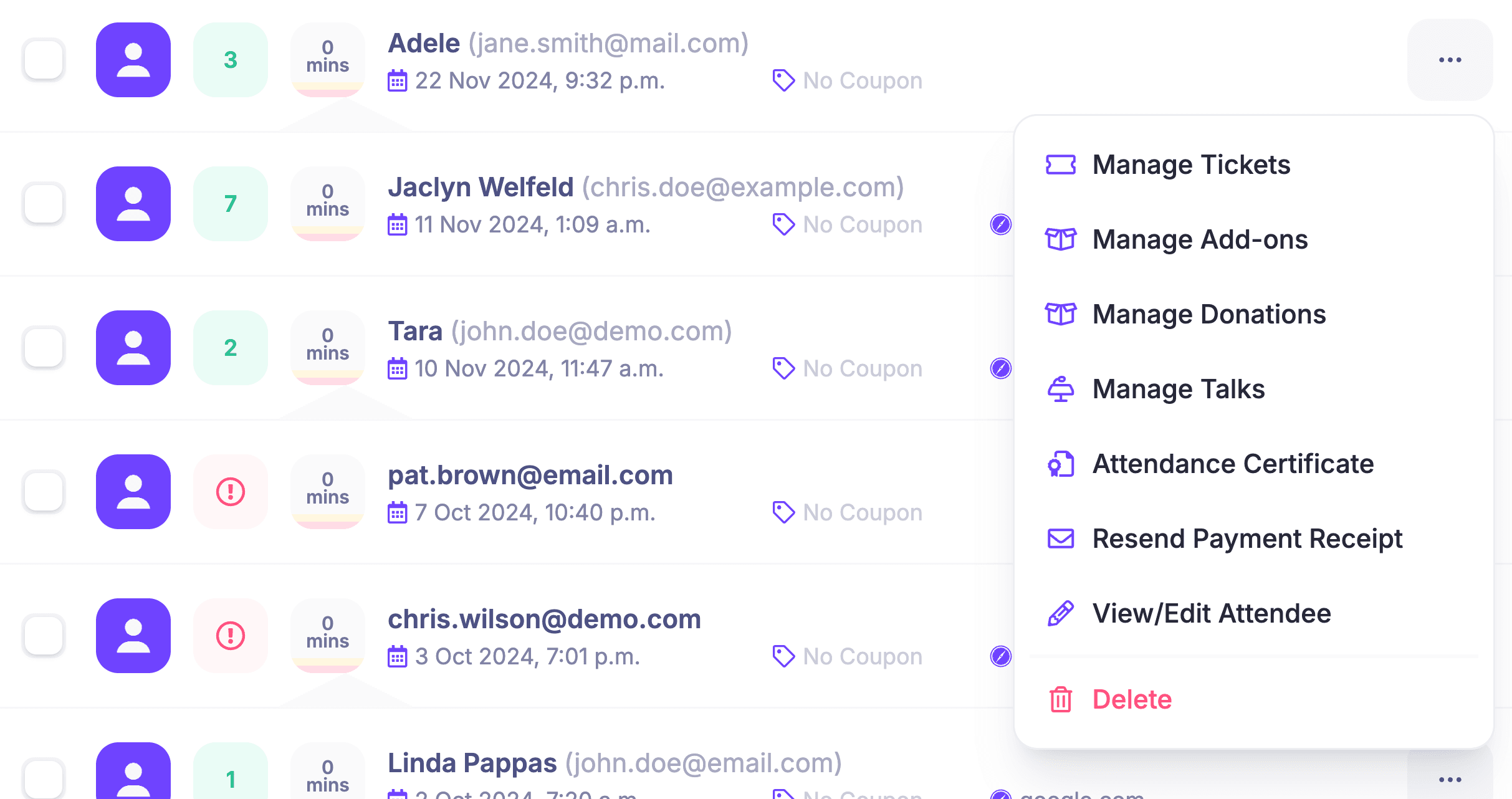
A simple attendee-management workflow to copy
If you are starting from scratch, use this sequence:
- Define the attendee journey: registration, confirmation, reminders, access, support, engagement, replay, feedback, and follow-up.
- Collect only useful registration data: keep forms short, but capture the fields that power segmentation or support.
- Set ticket and access rules: decide who can attend which sessions, who gets replays, and how upgrades work.
- Write attendee emails: confirmation, reminders, access instructions, replay, and post-event follow-up.
- Prepare live support: owner, channel, escalation path, common answers, and accessibility checks.
- Capture engagement and feedback: questions, polls, surveys, chat themes, attendance, and replay behavior.
- Send segmented follow-up: use attendance, ticket type, interest, and survey response to choose the next message.
- Review reporting: improve the next event based on registration, attendance, revenue, support issues, and follow-up outcomes.
That is the practical difference between "we hosted an event" and "we managed the attendee journey." When attendees know where to go, what they can access, how to get help, and what happens next, the event feels more professional and the follow-up becomes easier to run.
Frequently asked questions
Table of Contents
Event attendee management checklist1. Before the event: make registration useful2. During the event: reduce confusion in real time3. After the event: follow up while context is freshMeasure attendee management, not just attendanceA simple attendee-management workflow to copyFrequently Asked QuestionsTry HeySummit free
HeySummit is the easiest way for creators and educators to grow their audience, authority and revenue with professional online events created in minutes, not weeks.
Share this article on:
Recent Posts
Loading feed...