Speaker Promotion Kit Template for Online Summits
-1690817315934-652794559.png&w=96&q=75)
Benjamin Dell
Founder, HeySummit
A speaker promotion kit gives your confirmed speakers everything they need to share your event without rewriting the message from scratch. For an online summit, that usually means the registration link, speaker-specific session details, approved copy, images, suggested send dates, tracking links, and a short explanation of what to do next.
This is different from a speaker media kit. A speaker media kit helps the speaker pitch themselves to organizers, podcasts, media, or event teams. A speaker promotion kit is created by the event organizer after the speaker is already involved. Its job is to make the event easier for the speaker to promote.
Use the template below to build a practical kit for your online summit, webinar series, workshop, or multi-speaker event. Keep it simple enough for speakers to use in a few minutes, but specific enough that every post, email, and referral link points people to the right place.
Speaker promotion kit definition
A speaker promotion kit is a package of promotional assets an event organizer gives speakers so they can invite their own audience to attend. It normally includes event messaging, speaker-specific links, sample social posts, email copy, graphics, deadlines, hashtags, and instructions for tracking or affiliate links.
Public event toolkit examples show why this works best as a single, organized resource. BrandSwan's event media kit template frames an event media kit as a way to help speakers, sponsors, and event coordinators share consistent event materials. Placid's speaker-promotion ideas show how speaker highlight graphics, personalized coupon codes, lineup visuals, and social images can give contributors concrete assets to share.
The important organizer-side question is not "Can we make speakers promote?" It is "Can we remove enough friction that the right speakers can share confidently when the timing is right?"
Speaker media kit vs speaker promotion kit
The two kits often get mixed together, but they solve opposite problems. A speaker media kit introduces the speaker and their expertise. A summit promotion kit starts from the organizer's event and helps already-confirmed speakers invite the right people to attend.
| Kit type | Created by | Primary audience | Main job | Typical assets |
|---|---|---|---|---|
| Speaker media kit | The speaker | Organizers, media, podcast hosts, partners | Help the speaker get booked, introduced, or covered | Bio, headshots, topics, credentials, past appearances, press links |
| Speaker promotion kit | The event organizer | Confirmed speakers and partners | Help speakers promote a specific event or session | Registration links, session details, social copy, email copy, graphics, deadlines, tracking links |
Speaker promotion kit checklist
Start with the smallest complete kit. Speakers should not have to search through old emails to find the event link, wonder which image is approved, or ask whether they can change the wording.
| Asset | What to include | Owner | Best format | When it should be ready |
|---|---|---|---|---|
| Event promise | One or two plain-English sentences that explain who the event is for and why it matters. | Organizer | Short copy block | Before speaker outreach |
| Registration link | The public event page, plus any speaker-specific tracking, referral, or affiliate link. | Organizer | Clickable URL | Before the first promotion ask |
| Speaker session details | Session title, date, time, timezone, format, and speaker-specific page or talk link. | Organizer and speaker | Speaker dashboard or shared document | Before announcement week |
| Social copy | Short, medium, and personalizable post options for LinkedIn, X/Twitter, Facebook, or community channels. | Organizer | Copy blocks | Announcement week |
| Email copy | A short newsletter blurb, a dedicated email option, subject-line ideas, and a reminder email. | Organizer | Copy blocks | Two to four weeks before the event |
| Graphics | Speaker card, event banner, square image, story image, and any sponsor or partner-safe assets. | Organizer or designer | Download folder or media library | Announcement week |
| Promotion schedule | Recommended send dates and reminders for launch, two weeks out, final week, event day, and replay launch. | Organizer | Timeline table | With the first kit |
| Claims to avoid | Guidance on pricing, deadlines, results, revenue, audience size, certification, or limited availability. | Organizer | Short notes | With every copy block |
Speaker promotion kit template
Copy this structure into your speaker portal, shared document, Notion page, or event dashboard. Replace the placeholders before sending it to speakers.
1. Quick-start note
Template:
Thanks for being part of [Event Name]. We have put together this promotion kit so you can share your session with your audience quickly. You can copy the suggested posts as written or adapt them to your voice. Please use your speaker link when possible so we can understand which promotion moments are working.
Your speaker link: [Speaker-specific registration or affiliate link]
Your session: [Session title], [date], [time and timezone]
Best audience fit: [One sentence describing who should attend]
2. Event description
Short version:
[Event Name] is a [format] for [audience] who want to [main outcome]. Join us on [date] for practical sessions on [topic cluster].
Longer version:
[Event Name] brings together [speaker/customer/community type] to help [audience] [outcome]. Across [number] sessions, attendees will learn how to [benefit 1], [benefit 2], and [benefit 3]. My session, [Session Title], will cover [specific takeaway].
3. LinkedIn post options
Option A: direct invitation
I am speaking at [Event Name] on [date]. My session is about [topic], and it is designed for [audience] who want to [outcome].
You can register here: [speaker link]
Option B: problem-led
If you are trying to [reader problem], I am joining [Event Name] to share a practical session on [topic]. I will cover [specific takeaway], with examples you can use in your own work.
Join here: [speaker link]
Option C: personal angle
I have been thinking a lot about [speaker perspective or challenge]. That is why I am excited to speak at [Event Name] and share [session promise].
If this is relevant to you, I would love to see you there: [speaker link]
4. Short social posts
- I am speaking at [Event Name] on [date]. Join my session on [topic]: [speaker link]
- Excited to join [Event Name] and talk about [specific takeaway]. Register here: [speaker link]
- If you care about [audience problem], join us at [Event Name]. My session covers [topic]: [speaker link]
5. Email or newsletter blurb
Subject line ideas:
- I am speaking at [Event Name]
- Join my session on [topic]
- A practical event for [audience]
Email copy:
Hi [First Name],
I am speaking at [Event Name] on [date], a [format] for [audience]. My session is called [Session Title], and I will be sharing [specific takeaway].
If you are working on [reader goal or problem], I think you will find the event useful. You can register here: [speaker link]
Hope to see you there,
[Speaker Name]
6. Promotion schedule
| Timing | Speaker ask | Organizer support |
|---|---|---|
| Announcement week | Share one post announcing the session. | Provide speaker graphic, event link, and short post options. |
| Two weeks before | Send a newsletter mention or second social post. | Share a fresh angle, reminder copy, and any early registration milestone if safe to disclose. |
| Final week | Post a reminder with the session date and main takeaway. | Provide final-week copy and confirm links still work. |
| Event day | Share a short "today" post if it fits the speaker's audience. | Send a ready-to-use post and the correct join or registration link. |
| Replay launch | Share the replay or on-demand access link if available. | Clarify who can watch, how long access lasts, and whether there is an upgrade path. |
Give each speaker the right link
The most common promotion-kit mistake is giving every speaker the same generic event link. A generic link is fine for simple awareness, but it does not help you learn which speakers, partners, emails, or channels are driving registrations.
Use one of three link types:
- Speaker-specific registration link: useful when you want each speaker to share a unique URL but do not need commissions.
- Referral link: useful when you want to attribute registrations or leads to a speaker, partner, or community.
- Affiliate link: useful when speakers or partners can earn commission for paid tickets, all-access passes, or event offers.
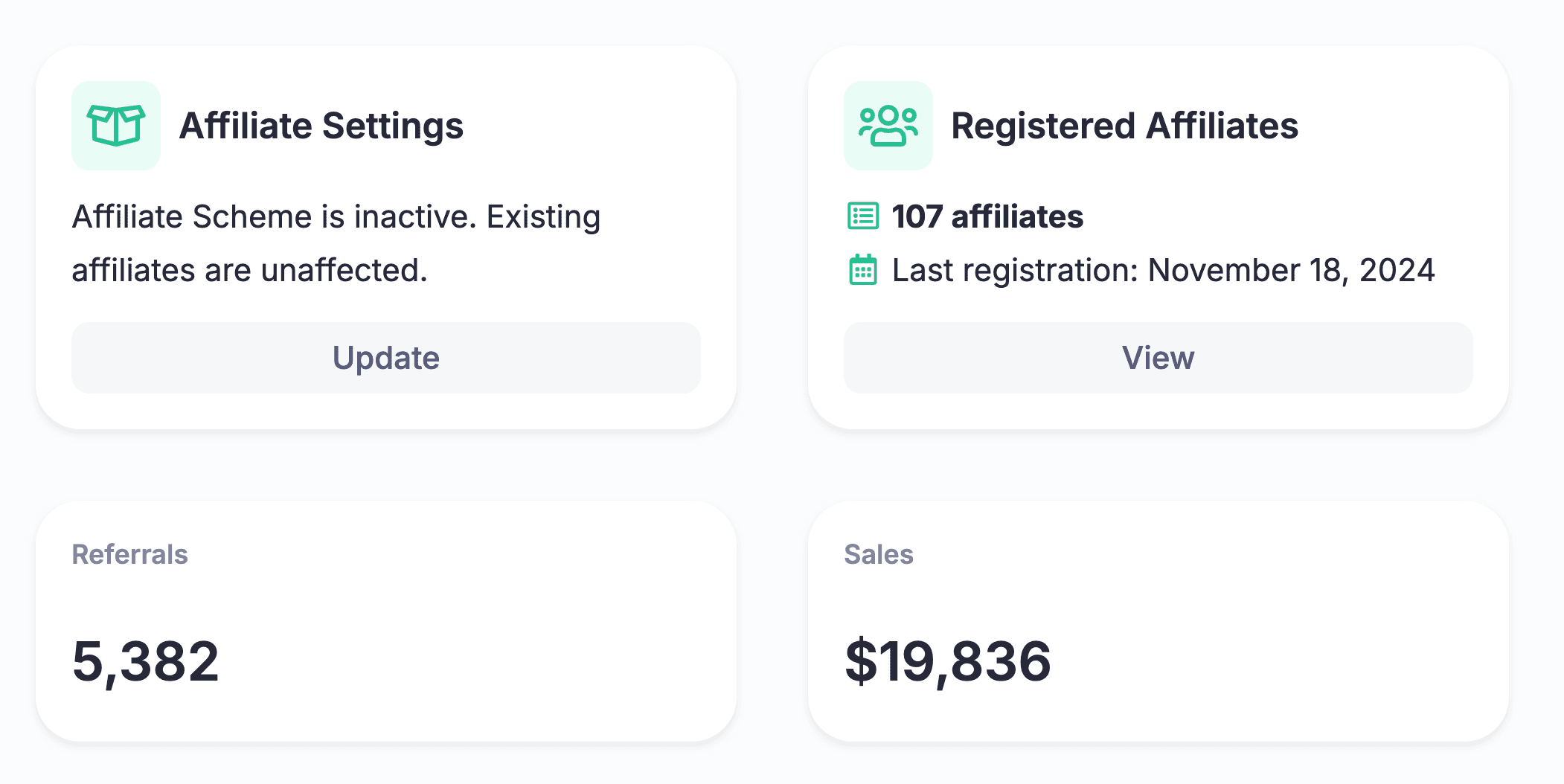
If you are using affiliate or referral links, explain the rules clearly. Speakers should know what counts, whether the program applies to free or paid registrations, when commissions are reviewed, and where they can see performance. Avoid implying that every share will create sales; the kit should make sharing easier and measurement cleaner, not promise outcomes you cannot control.
HeySummit's affiliate platform is built for event affiliate signup, central affiliate management, affiliate dashboards, commission settings, and performance tracking. That makes it a useful internal link when your promotion kit includes trackable partner or speaker links.
Put the kit where speakers can actually use it
A promotion kit hidden in a long email thread will be missed. Put the kit somewhere speakers can return to when they are ready to post, check their link, update session information, or find the next deadline.
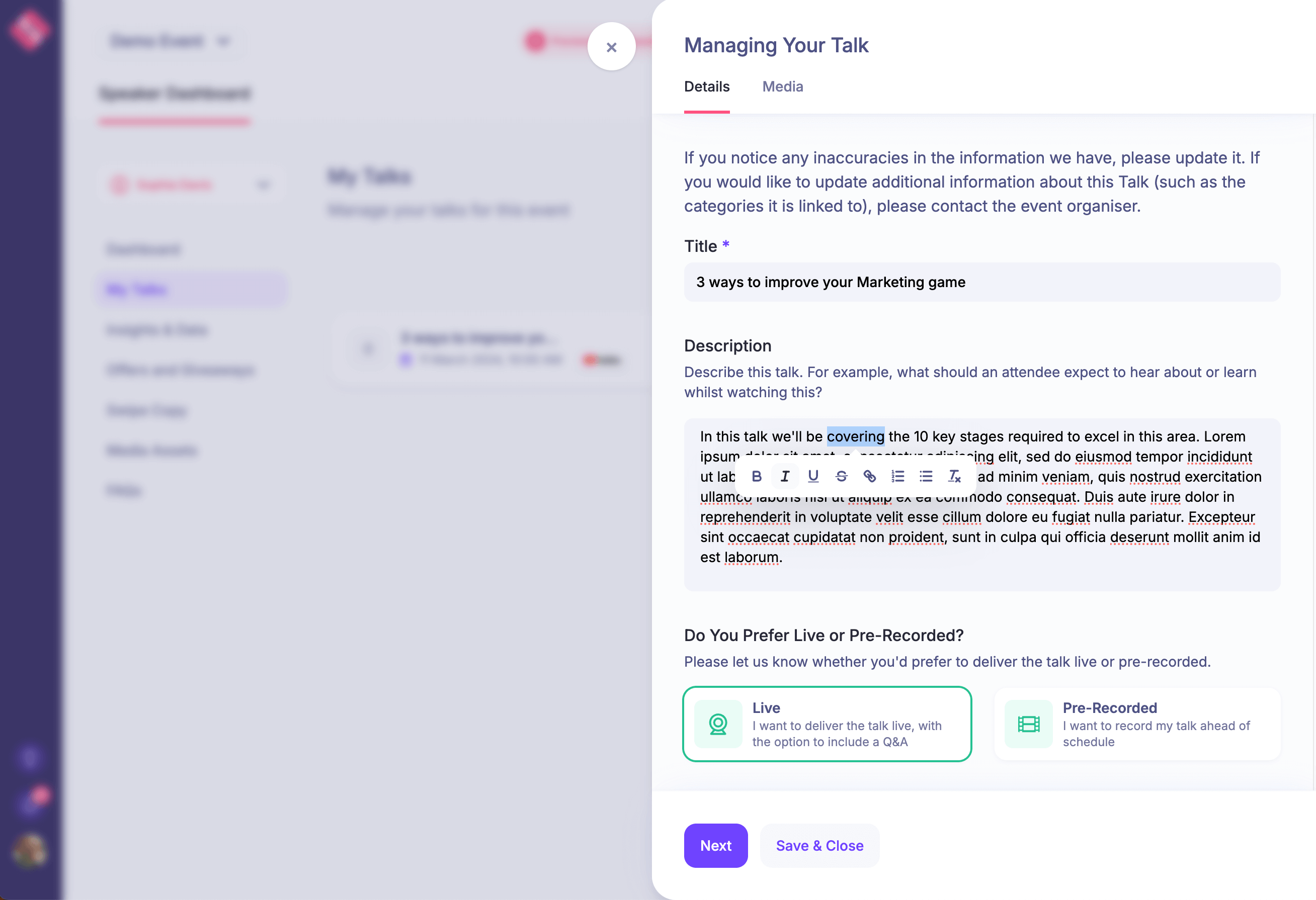
For a small event, that might be a shared document. For a multi-speaker summit, a speaker dashboard or portal is cleaner because the same place can hold profile details, talk information, media, resources, and promotion instructions.
HeySummit's speaker dashboard gives speakers a dedicated place to update profiles, session information, and resources, while organizers control what speakers can access. That is useful when the promotion kit depends on accurate session titles, speaker bios, links, media, and event timing.
What to include in the speaker dashboard or portal
If the promotion kit lives inside your speaker workflow, organize it around the actions speakers need to take.
- Session details: title, date, time, timezone, description, format, and audience takeaway.
- Profile information: bio, headshot, links, title, company, and any required permissions.
- Promotion assets: approved copy, graphics, hashtags, event description, speaker-specific link, and posting schedule.
- Affiliate or referral details: link, tracking rules, commission or reward details, and reporting location.
- Speaker instructions: how to join, what to prepare, where to ask questions, and what happens after the event.
This also helps the organizer. Instead of repeatedly answering "Where is my link?" or "Which graphic should I use?", you can point speakers back to the same working hub.
Promotion copy rules that prevent messy messaging
The best speaker copy is easy to personalize without becoming inaccurate. Add a short "do and do not" section to your kit.
| Rule | Good guidance | Why it matters |
|---|---|---|
| Personalize the opening | Invite speakers to add why the topic matters to them. | The message feels like it came from the speaker, not a pasted ad. |
| Keep the event promise consistent | Give one approved description of the event and audience. | Attendees see a clear, consistent reason to register. |
| Avoid unsupported guarantees | Do not promise revenue, certification, attendee numbers, or outcomes unless verified. | Speakers stay credible and the event avoids overpromising. |
| Use the right link | Tell speakers when to use their tracking or affiliate link. | You can measure contribution without guessing later. |
| Make the next step obvious | Every post or email should point to registration, replay access, or the correct event page. | Interested readers know exactly what to do. |
When speakers do not promote
Some speakers will not promote, even with a good kit. Treat that as feedback on the process rather than a character flaw.
Check the basics first:
- Did they receive the kit early enough?
- Is their speaker link easy to find?
- Is the event clearly relevant to their audience?
- Are the copy blocks short enough to use quickly?
- Do they need approval from a team, agency, employer, or partner?
- Have you asked for too many posts across too many channels?
If you need a lighter ask, send one timely option instead of the whole kit: "Could you share this single post today?" A concrete asset is easier to use than a vague request to "spread the word."
Measure the kit after the event
After the event, review what actually happened. You do not need a complicated report, but you should know whether the kit helped speakers share and whether that sharing created useful registrations, sales, or engagement.
Look at:
- Which speakers used their links.
- Which posts, emails, or channels created registrations.
- Which speakers asked for clearer assets or deadlines.
- Whether affiliate or referral rules were understood.
- Which kit assets should be reused, rewritten, or removed next time.
If the event was part of a broader audience-growth plan, connect the promotion results to your post-event reporting. The goal is not just to thank speakers; it is to improve the next event's speaker onboarding, promotion timing, and partner workflow.
Turn the kit into a repeatable speaker workflow
A useful speaker promotion kit should make the next event easier. Save the pieces that worked: the event description, copy blocks, graphic sizes, link rules, timeline, FAQ answers, and the messages speakers actually used.
Then make the workflow repeatable:
- Create the event page and registration link before asking speakers to promote.
- Confirm session titles and speaker details before building graphics.
- Generate each speaker's tracking or affiliate link before announcement week.
- Send the kit with recommended dates and one clear first action.
- Follow up with fresh copy instead of resending the same request.
- Review results after the event and improve the next kit.
If you are running online summits, workshops, or speaker-led events regularly, the promotion kit should live inside the same system as your registration, speaker details, partner tracking, emails, and reporting. That is where an online event platform becomes useful: it connects the promotional ask to the rest of the event operation.
To see how this fits inside HeySummit, explore the speaker dashboard, review the affiliate platform, or take the HeySummit product tour to build your next speaker-led event with the kit, links, and follow-up workflow in one place.
Frequently asked questions
Table of Contents
Speaker promotion kit definitionSpeaker media kit vs speaker promotion kitSpeaker promotion kit checklistSpeaker promotion kit templateGive each speaker the right linkPut the kit where speakers can actually use itWhat to include in the speaker dashboard or portalPromotion copy rules that prevent messy messagingWhen speakers do not promoteMeasure the kit after the eventTurn the kit into a repeatable speaker workflowFrequently Asked QuestionsTry HeySummit free
HeySummit is the easiest way for creators and educators to grow their audience, authority and revenue with professional online events created in minutes, not weeks.
Share this article on:
Recent Posts
Loading feed...