Best Splash Alternatives in 2026: 8 Event Platforms Compared

Octavia
Content Contributor, HeySummit
If you are looking for a Splash alternative in 2026, the best choice depends on the type of events you run.
Splash is still a strong fit for marketing teams that run branded, repeatable field events, especially when they care about polished registration pages, brand control, CRM-connected event programs, and measuring event marketing performance. Since Cvent acquired Splash in 2024, some buyers will also evaluate Splash alongside the wider Cvent event portfolio.
HeySummit is a stronger fit for creators, educators, communities, nonprofits, and lean event teams that want to run online, hybrid, in-person, paid, replay, sponsor, and speaker-led events without stitching together separate landing pages, registration, event ticketing, emails, speakers, sponsors, affiliates, video tools, and analytics.
Use this guide to compare Splash, HeySummit, Eventbrite, Cvent, vFairs, Goldcast, Airmeet, and Whova by fit, pricing model, event format, and operational tradeoff. If you want to see how HeySummit works before you compare every detail, start with the product tour.
| Platform | Best for | Event formats | Pricing model to expect | Main tradeoff |
|---|---|---|---|---|
| HeySummit | Creators, educators, communities, nonprofits, and lean teams running monetized or speaker-led event programs. | Online, hybrid, in-person, paid, free, on-demand, replay, summit, webinar, workshop, and community events. | Public pricing page with plans, attendee limits, ticketing, transaction fees, and trial details. | Best when your team wants one practical event workflow rather than a large enterprise event app. |
| Splash | Marketing and field-marketing teams that need branded repeatable event programs and CRM-connected event data. | Live, hybrid, virtual, and repeatable marketing events. | Current public pricing page frames Pro and Enterprise plans with unlimited events and registrations, with sales-led evaluation. | Less direct fit for smaller teams that need built-in speakers, sponsors, monetization, and content-led event workflows. |
| Eventbrite | Public ticketed events that benefit from marketplace discovery and straightforward ticket sales. | In-person, local, entertainment, classes, workshops, nonprofit, and public ticketed events. | No fees for free events; Eventbrite's US pricing page lists paid-ticket service and payment-processing fees. | Strong for discovery and ticketing, but not a full summit, speaker, sponsor, replay, or event-content workflow. |
| Cvent | Enterprise event teams managing larger meetings, conferences, venue sourcing, onsite operations, and complex event programs. | In-person, hybrid, virtual, conference, field marketing, internal event, trade show, and webinar programs. | Sales-led enterprise pricing. | Powerful but heavier than many small teams need. |
| vFairs | Virtual expos, trade shows, career fairs, and immersive event environments. | Virtual, hybrid, expo, trade show, career fair, and conference events. | Sales-led packages. | Useful for immersive virtual venues, but can be more platform than a simple summit or workshop needs. |
| Goldcast | B2B marketers running webinars, digital events, and content programs tied to pipeline. | Webinars, virtual events, video content, and demand-generation programs. | Sales-led pricing. | Strong marketing-event focus, but not primarily built around creator-led summits, paid tickets, or broad event format flexibility. |
| Airmeet | Virtual and hybrid events where attendee engagement, networking, booths, and managed-event support matter. | Webinars, conferences, summits, hybrid events, expos, fairs, and managed events. | Airmeet publishes plan information for webinars and personalized quote paths for larger events and managed events. | Good for engagement-heavy virtual experiences, but may be more event-venue oriented than a lean event business workflow. |
| Whova | Conferences and associations that prioritize mobile event apps, agendas, networking, exhibitors, and attendee engagement. | In-person, hybrid, virtual, conference, and association events. | Sales-led pricing. | Strong attendee app and conference operations, but less focused on creator monetization and content-led event funnels. |
Splash in 2026
Splash is an event marketing platform for branded event programs. Its current positioning focuses on on-brand, measurable, repeatable events for teams that need registration, page design, email, analytics, integrations, and event-program consistency.
The biggest context change is ownership. Cvent announced the acquisition of Splash on September 4, 2024, describing Splash as event marketing technology for on-brand, measurable, repeatable event programs. That does not mean Splash became the same as Cvent's broader enterprise event platform, but it does mean buyers should evaluate Splash with Cvent's wider event stack in mind.
Splash's public pricing page now emphasizes Pro and Enterprise plans, unlimited events, unlimited registrations, any format, and no hidden fees. Because Splash pricing is still sales-led, small teams should ask what is included in the plan, what integrations or service levels cost extra, and how paid registration, CRM sync, templates, permissions, and analytics map to their actual event volume.
Splash vs HeySummit
Splash and HeySummit can both support event registration and branded attendee experiences, but they are usually chosen for different reasons.
Choose Splash when your team mainly needs repeatable branded marketing events, controlled templates, CRM-connected field marketing programs, and event-marketing measurement. It is a stronger fit for marketing departments that run many similar events and need consistency across teams or regions.
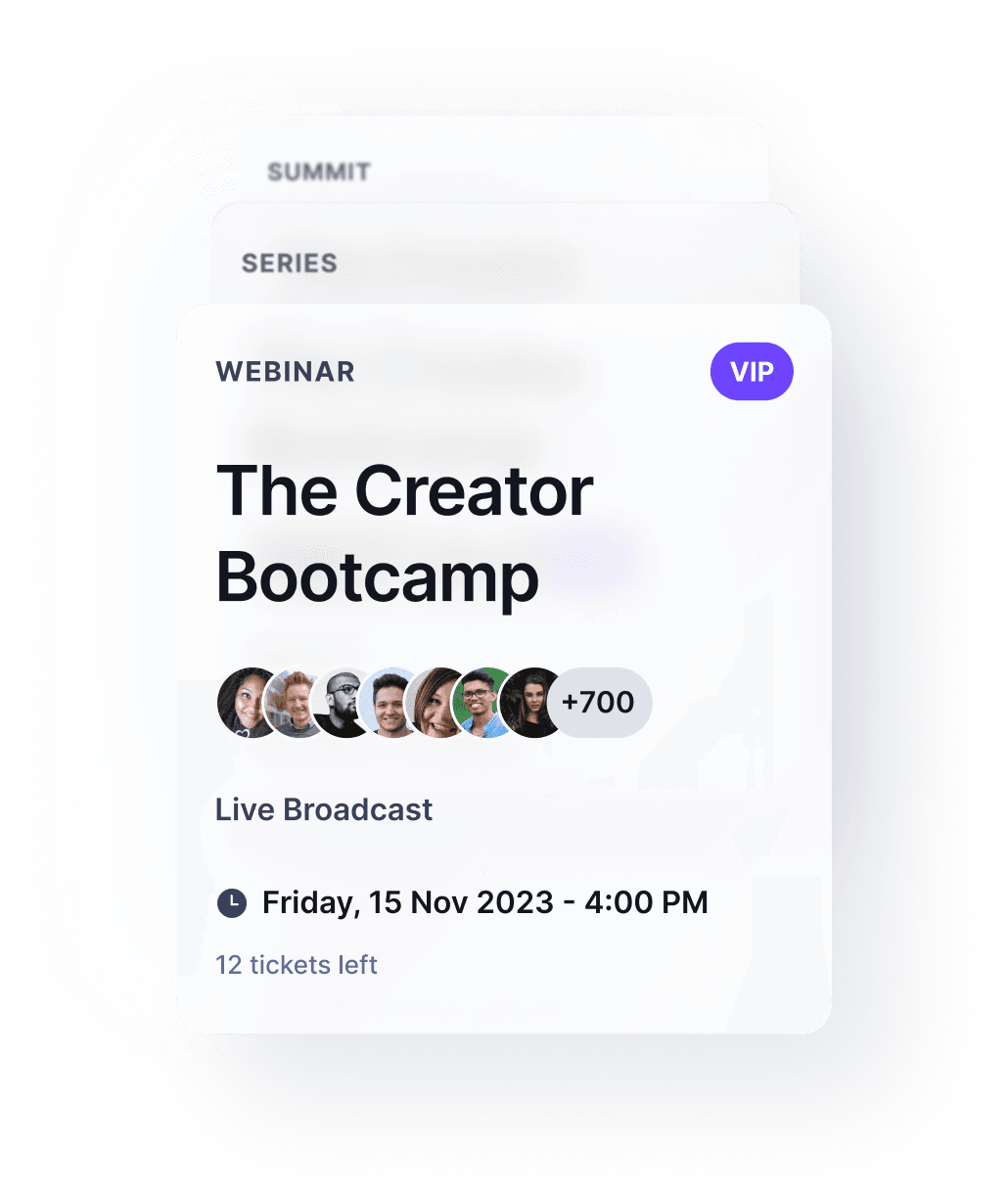
Choose HeySummit when your team needs the event itself to drive audience growth, authority, revenue, education, or community engagement. HeySummit brings the operational pieces together: event pages, registration, paid event registration, checkout, custom event emails, speakers, sponsors, affiliates, video and streaming integrations, replays, and reporting and analytics.
The practical distinction is simple: Splash is strongest for repeatable event marketing operations. HeySummit is strongest when a lean team needs to launch and monetize an event without building a separate event stack.
How to choose a Splash alternative
Before you compare feature lists, write down the event job you actually need the platform to do. Most Splash alternatives look similar at the top level, but they split quickly once you compare format, buying motion, monetization, and event operations.
Choose by event format
If your program is mostly field marketing, roadshows, customer dinners, and repeatable brand-controlled events, Splash and Cvent should be on the shortlist. If your program is an online event platform or hybrid event platform workflow with speakers, sponsors, tickets, content, and replays, HeySummit is more directly aligned.
If you need expo-style virtual venues, vFairs or Airmeet may be closer. If you need a public ticketing marketplace, Eventbrite may be the simplest starting point. If you need a conference mobile app and attendee networking layer, Whova may fit better.
Choose by monetization model
Splash is usually evaluated as event marketing software. Eventbrite is often evaluated around ticketing and marketplace discovery. Airmeet, vFairs, Cvent, Goldcast, and Whova often involve sales-led packages.
HeySummit is a better fit when the event revenue model matters inside the platform itself. You can use event ticketing, paid access, add-ons, checkout, sponsor workflows, replay access, and event analytics together rather than joining separate tools after the fact. Use the HeySummit pricing page for current plan and trial details.
Choose by team capacity
Large event departments can absorb heavier implementation, procurement, permissions, integrations, and reporting workflows. Smaller teams usually need a platform that removes coordination work. That is where HeySummit's event landing page builder, speaker workflows, ticketing, emails, streaming integrations, and reporting are useful.
If you have one or two people running the event, do not only ask "which platform has more features?" Ask "which platform reduces the number of tools, handoffs, and manual checks we need before launch day?"
Best Splash alternatives for different teams
1. HeySummit: best for online, hybrid, paid, and speaker-led events
HeySummit is the strongest Splash alternative when your event depends on content, speakers, registrations, ticket revenue, sponsors, emails, replays, and post-event learning. It is especially useful for creators, educators, expert communities, nonprofits, and event-driven businesses that want to launch faster without losing control over the attendee journey.
You can run flexible event formats, build event pages, invite speakers, sell access, connect webinar or streaming tools, send event emails, add sponsors, open replays, and measure what happened after the event. That makes HeySummit a practical alternative for summits, workshops, training events, virtual conferences, hybrid programs, and recurring event series.
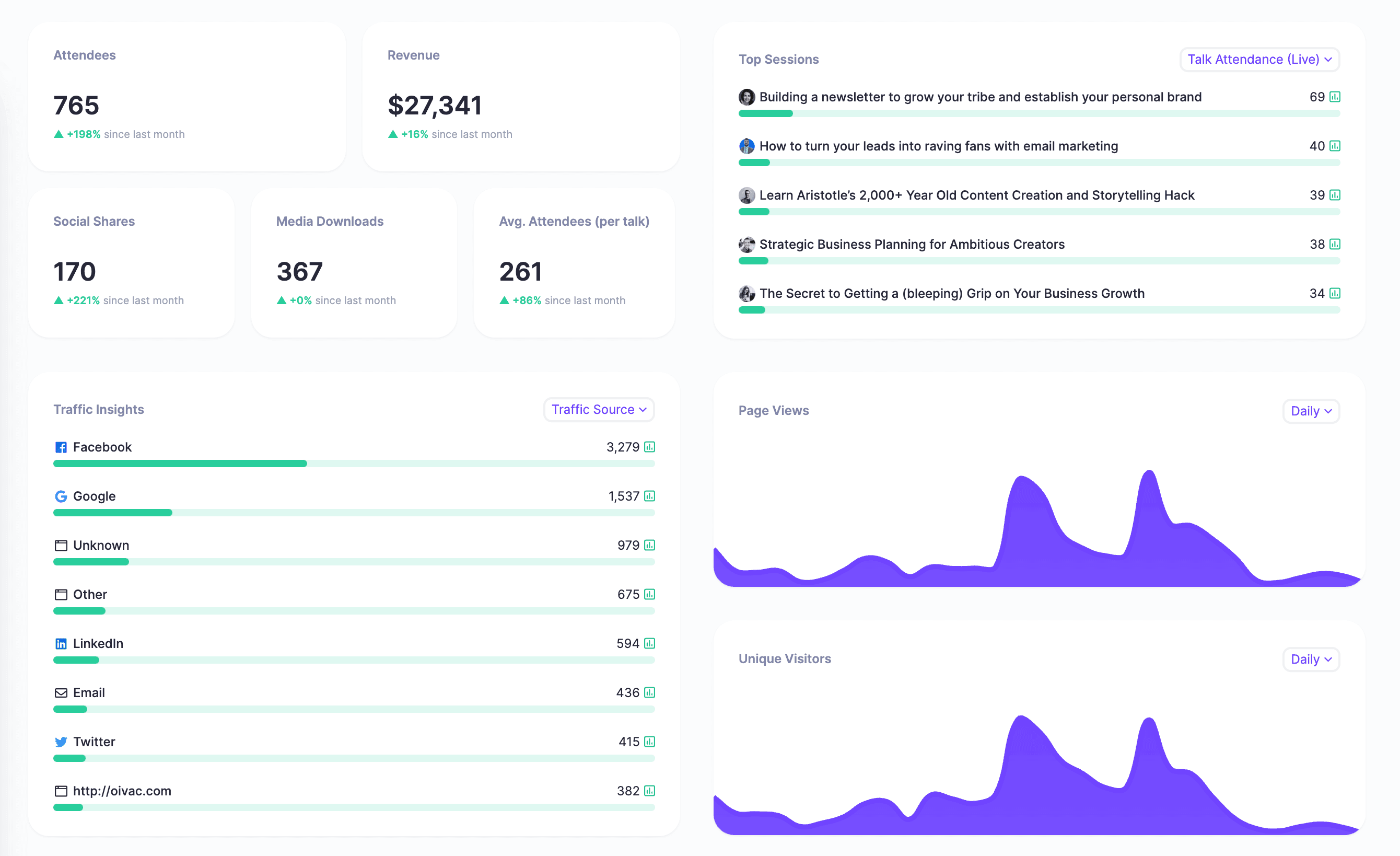
HeySummit is not trying to be an enterprise onsite mobile event app first. If your event revolves around mobile attendee apps, onsite check-in, badge printing, and enterprise field operations, evaluate Cvent, Whova, or another onsite-heavy platform. If your event revolves around launching, monetizing, and improving a content-led event, HeySummit is a better starting point.
To go deeper, compare HeySummit with the broader market on the compare event platforms hub, review HeySummit reviews, or look at customer success stories when you need proof before choosing.
2. Splash: best for branded repeatable event marketing
Splash remains a strong option when branded event marketing is the core job. Marketing teams can use Splash for registration pages, templates, email, analytics, and CRM-connected event programs across live, hybrid, and virtual formats.
Its current pricing page highlights Pro and Enterprise plans for growth teams and enterprise teams. Since pricing is not fully self-serve, buyers should confirm event volume, registration limits, paid registration needs, CRM integrations, permissions, analytics, support, and implementation before committing.
Splash is less likely to be the best fit when a smaller team needs built-in speaker management, sponsor pages, content access, paid event funnels, and replay-led monetization. That is where HeySummit usually fits more naturally.
3. Eventbrite: best for marketplace ticketing and public events
Eventbrite is a good Splash alternative when the event is public, ticketed, and benefits from marketplace discovery. Its official pricing page says free events have no fees and lists US paid-ticket service and payment-processing fees for ticket buyers or organizers, depending on setup.
Eventbrite is often simpler than a full event platform when you just need to list, promote, and sell tickets. It is not the same as a full online summit platform. If you need speakers, sponsors, replays, segmented event emails, video integrations, and event-content analytics, compare Eventbrite vs HeySummit directly.
4. Cvent: best for enterprise event management
Cvent is a better fit when the buyer needs enterprise event management across registration, marketing, venue sourcing, onsite tools, mobile apps, attendee engagement, lead retrieval, reporting, and integrations. It is often evaluated by larger organizations with complex event portfolios and procurement processes.
Because Cvent acquired Splash, some teams may now compare Splash and Cvent together: Splash for repeatable event marketing programs, Cvent for broader enterprise event management. If you are deciding between a heavier enterprise platform and a leaner event workflow, compare Cvent vs HeySummit.
5. vFairs: best for virtual expos and immersive event environments
vFairs is useful when your event needs a more immersive virtual venue, expo hall, career fair, or trade show environment. It can make sense for teams that want a virtual event space with exhibitor and attendee engagement layers.
For smaller teams running summits, workshops, and content-led events, vFairs may be more than you need. If you are choosing between immersive virtual venues and a practical event workflow, compare vFairs vs HeySummit.
6. Goldcast: best for B2B webinar and digital event marketing
Goldcast is a strong candidate for B2B marketers running webinars and digital events that need to connect to pipeline, content, and demand generation. It is more marketing-event oriented than a general public ticketing marketplace.
Goldcast is worth considering when the event is part of a B2B marketing motion. HeySummit is usually a better fit when the event also needs creator-friendly publishing, paid tickets, speaker workflows, sponsor support, replay access, and flexible formats for a leaner team.
7. Airmeet: best for engagement-heavy virtual and hybrid events
Airmeet is built around virtual and hybrid events with engagement features, networking, booths, analytics, and managed-event options. Its current pricing page publishes webinar plan information and uses personalized quote paths for broader Events and Managed Events packages.
Airmeet can work well when the event experience itself needs a virtual venue feel. HeySummit is usually a better fit when the priority is launching and monetizing an event program with tickets, speakers, sponsors, content, emails, streaming integrations, and reporting connected in one workflow.
8. Whova: best for conference apps and attendee engagement
Whova is a common option for conferences, associations, and larger events that need agenda management, mobile app features, attendee networking, exhibitors, and event engagement.
It is less directly aligned with creator-led summits, paid online workshops, replay funnels, and event monetization workflows. If a mobile conference app is central, Whova belongs on the shortlist. If event launch speed and revenue workflow are central, HeySummit may be easier to operate.
Which Splash alternative should you choose?
- Choose HeySummit if you need event pages, registration, tickets, checkout, speakers, sponsors, emails, video integrations, replays, and analytics in one workflow.
- Choose Splash if your team runs repeatable branded marketing events and needs strong template, registration, CRM, and event-marketing measurement workflows.
- Choose Eventbrite if marketplace discovery and simple public ticketing matter more than a full event platform.
- Choose Cvent if your team needs enterprise event management, onsite operations, and a broader event stack.
- Choose vFairs or Airmeet if immersive virtual environments, booths, networking, or managed virtual-event support are central.
- Choose Goldcast if you are a B2B marketing team optimizing webinars and digital events for pipeline.
- Choose Whova if a conference mobile app and attendee engagement layer are the main requirements.
For many small teams, the decision comes down to tool sprawl. If choosing Splash means you still need separate tools for ticketing, speaker intake, sponsor pages, streaming, replay access, event emails, analytics, and checkout, compare that full operating cost with HeySummit, not just the platform subscription.
Final recommendation
Splash is a credible platform for branded, repeatable event marketing, especially now that it sits in Cvent's orbit. It is not automatically the best fit for every team looking for event management software.
If your team needs enterprise event marketing controls, sales-led implementation, and CRM-connected field-event programs, shortlist Splash and Cvent. If your team needs to launch events that grow audience, authority, community, or revenue, start with HeySummit.
The fastest next step is to map your real event workflow. If you need a practical system for online, hybrid, in-person, ticketed, speaker-led, sponsor-supported, and replay-driven events, take the HeySummit product tour and then check the current pricing page.
Sources and further reading
Frequently asked questions
Table of Contents
Splash in 2026Splash vs HeySummitHow to choose a Splash alternativeBest Splash alternatives for different teamsWhich Splash alternative should you choose?Final recommendationSources and further readingFrequently Asked QuestionsTry HeySummit free
HeySummit is the easiest way for creators and educators to grow their audience, authority and revenue with professional online events created in minutes, not weeks.
Share this article on:
Recent Posts
Loading feed...